Are you actually ready to start your research project?
Guest post by Gary Thomas
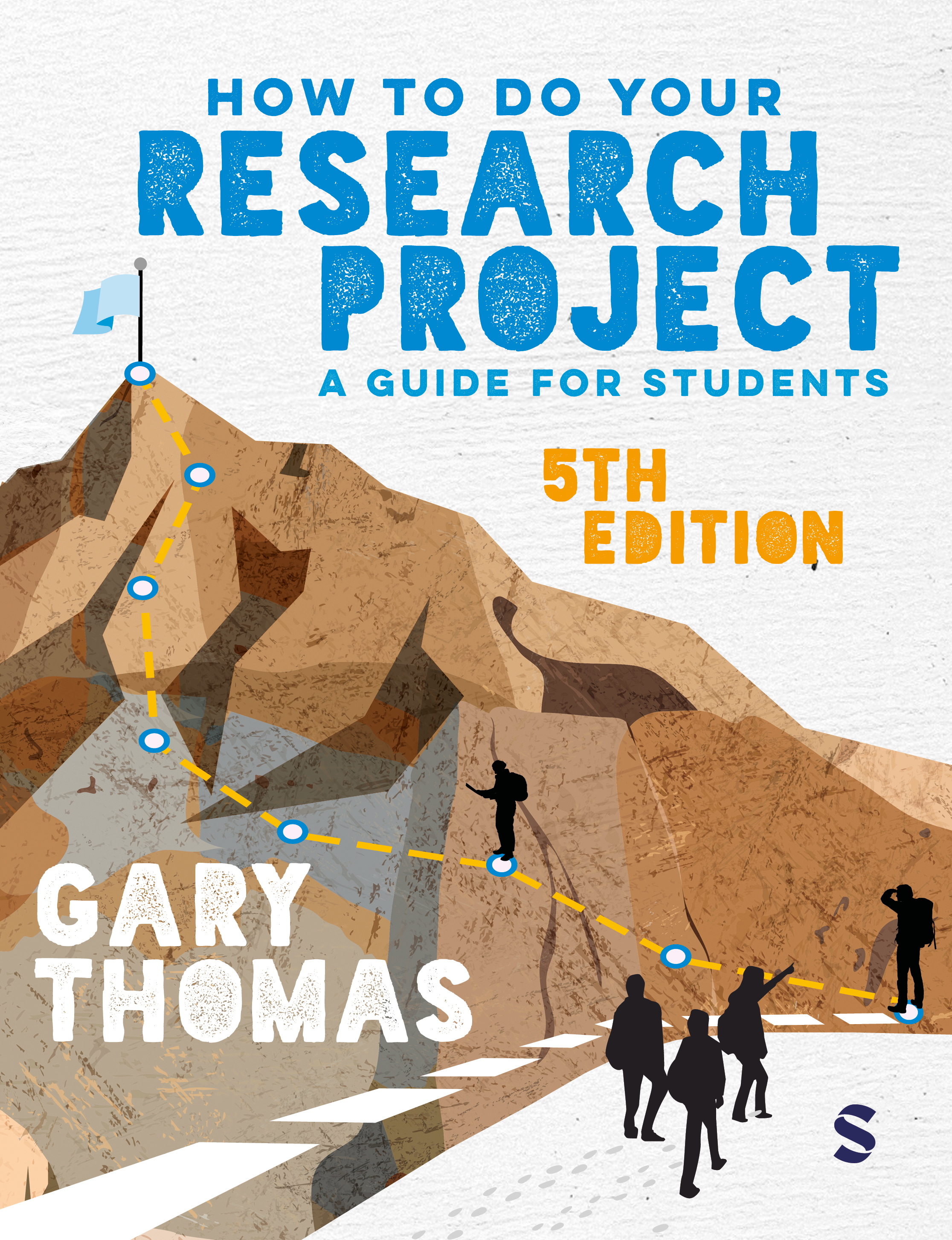
How to do Your Research Project is now in its 5th edition. Yup, 5th. So, tutors must continue to be recommending it, much to my delight. And since they are, why don't we see what all the fuss is about?
Here are some of the issues I cover in it.
1. Do you know what your research question actually is?
This sounds obvious.
It is not obvious.
At the start of the project, your question may have looked beautifully ambitious:
“An investigation into social, psychological, educational and technological factors affecting modern communication practices in post-pandemic learning environments.”
Translation: you had no idea what your project was about.
By the end, a good research question should be focused, answerable and comprehensible to another human being. The book explains how to do this.
2. Have you thought about why anyone should care?
One of the first points in the book is the reminder that research should answer the “So what?” question. This is crucial. Your marker should not finish the introduction wondering why they just spent twenty minutes reading about workplace communication among left-handed yoga instructors.
Your introduction needs to say:
what the issue is
why it matters
and what your project adds.
Think of it as intellectual matchmaking between your reader and your topic. Your job is to make them care.
3. Is your literature review going to be a story — or a laundry list?
A literature review is not:
“Smith said this”
“Jones said that”
“Patel also said something.”
That is not a review. It’s a list. The book repeatedly stresses that a literature review should develop a narrative, connecting ideas. The reader should feel guided through ideas, debates and tensions. They should not feel as though they are trapped inside a very dull annotated bibliography.
4. Have you used AI wisely?
The new edition acknowledges the growing role of AI tools in student research.
AI can help:
organise ideas
summarise literature, and I explain how to use the best AI sources for doing this
improve clarity
and rescue sentences that have clearly suffered emotional exhaustion.
AI cannot:
think critically for you
understand your data properly
If your dissertation randomly changes tone and begins sounding like a corporate robot with access to a thesaurus, your marker will notice. Probably immediately. So will Turnitin.
5. Have you thought about ethics?
Ethics sections are often treated like the vegetables of academic writing: everyone knows they matter, but enthusiasm varies.
Readers want reassurance that:
participants were treated respectfully
data were handled properly.
It’s a very good idea to think about all this before you start your research, and the book explains all the dos and don’ts of ethics.
6. How are you going to match your methods to your question?
In the book, I look at
interviews
questionnaires
observations
thematic analysis
SPSS
ethnography
interpretative phenomenological analysis
… and more
But I explain that you don’t want to use a method just because it sounds impressive. A good project uses methods that actually answer the question being asked. Simple is often stronger. I spend a lot of time explaining how to matchmake between the question you’re asking and the method needed to answer it.
7. Be sure to write a meaningful conclusion
A conclusion should:
explain how the research question has (or has not) been answered
reflect on findings,
acknowledge limitations,
and indicate what the research contributes.
It should not simply dredge through each chapter, summarising it. That’s a summary, not a conclusion.
8. Finally: be pragmatic
This may be the most important point of all. Social research projects are messy. My book describes research as recursive and iterative rather than perfectly linear. You’ll hit stumbling blocks and feel that you’re failing. But this is normal and (almost) to be welcomed, because social research – involving, amazingly, people – will rarely go perfectly according to plan. This means that …
you rethink things
you revise questions
That is not failure. That is research. And when you finally submit it, you will probably feel:
satisfaction
relief
exhaustion
pride
Which means you’ve probably done it correctly.