
Find a post
Data Collection

Following up from the launch of Inclusive Research Methodologies, this week Sage Research Methods expands its resources with another timely launch - Sage Research Methods Video: Doing Survey Research, a new video collection supporting learners through every stage of one of the most widely used research methods.

We’re excited to share that Research Methods - part of the 'Research Skills Toolkit' - has been updated to reflect today’s research landscape. Discover brand new content on Gen AI, Data Literacy and more – designed to support researchers with the skills they need in their careers.

In this guest post, Sage author Carol Rivas explores the current AI capabilities for researching society and culture.

Watch a free recording of the recent webinar on Data Collection & Analysis by Sage. Presented by Jessica Offenberger and Sean Scarisbrick, this enlightening session equips researchers with essential tools for effective data gathering, analysis, and interpretation.

Explore new free content in Sage’s Doing Research Online collection. This meaningfully curated resource features expert insights, practical case studies, videos, datasets and how-to guides, alongside hands-on strategies for conducting robust online research.

Find examples and guidance about collecting data on blogs or vlogs.
Jump to

Independence with Impact Report 2024
Discover how we're advancing disciplines, cultivating critical thinking skills, and driving social change in our latest report.
Quantitative Data Collection

Zina O'Leary discusses online data in this guest post.



Learn about experimental research designs and read open-access studies.

As technology becomes more integral to everything we do, the time we spend in front of screens such as smartphones and computers continues to increase. The pervasiveness of screen time has raised concerns among researchers, policymakers, educators, and health care professionals about the effects of digital technology on well-being. Despite growing concerns about digital well-being, it has been a challenge for scientists to measure how we actually navigate the digital landscape through our screens. For example, it is well documented that self-reports of one’s media use are often inaccurate despite survey respondents’ best efforts. Just knowing screen time spent on individual applications does not fully capture a person’s usage of the digital device either. Some could spend an hour on YouTube watching people play video games whereas others might spend the same amount of time watching late night television talk shows to keep up to date with the news. Even though the screen time is the same for the same application, the intentions and values of consumption of certain types of content can be vastly different among users.

My journey into text mining started when the institute of Digital Humanities (DH) at the University of Leipzig invited students from other disciplines to take part in their introductory course. I was enrolled in a sociology degree at the time, and this component of data science was not part of the classic curriculum; however, I could explore other departments through course electives and the DH course sounded like the perfect fit.

In this guest blog, Alix Dumoulin and Regina Catipon cover how to embrace text analysis as a social scientist, the challenge cleaning text corpora brings in preprocessing, and introduce our upcoming tool, Texti, that will save researchers time.

Back in February, I had the privilege of attending Social Science Foo Camp, a flexible-schedule conference hosted in part by SAGE at Facebook HQ where questions of progress in the age of Big Data were a major topic of discussion. What I found most insightful about these conversations is how using or advocating for Big Data is one thing, but making sense of it in the context of an established discipline to do science and scholarship is quite another.

Text data are a resource that we are only beginning to understand. Many human interactions are moving to the digital world, and we become increasingly sophisticated in documenting interactions. Face-to-face encounters are replaced by written communication (e.g., WhatsApp, Twitter) and every crime incident or hospital visit is recorded. All of these interactions leave a trace in the form of text data.

Social media has brought about rapid change in society, from our social interactions and complaint systems to our elections and media outlets. It is increasingly used by individuals and organizations in both the public and private sectors. Over 30% of the world’s population is on social media. We spend most of our waking hours attached to our devices, with every minute in the US, 2.1M snaps are created and 1M people are logging in to Facebook. With all this use, comes a great amount of data.

Following the launch of the SAGE Ocean initiative in February 2018, the inaugural winners of the SAGE Concept Grant program were announced in March of the same year. As we build up to this year’s winner announcement we’ve caught up with the three winners from 2018 to see what they’ve been up to and how the seed funding has helped in the development of their tools.
In this post, we spoke with the Digital DNA Toolbox (DDNA) winners, Stefano Cresci and Maurizio Tesconi about their initial idea, the challengers they faced along the way and the future of tools for social science research.

Human social behavior has rapidly shifted to digital media services, whether Gmail for email, Skype for phone calls, Twitter and Facebook for micro-blogging, or WhatsApp and SMS for private messaging. This digitalization of social life offers researchers an unprecedented world of data with which to study human life and social systems. However, accessing this data has become increasingly difficult.
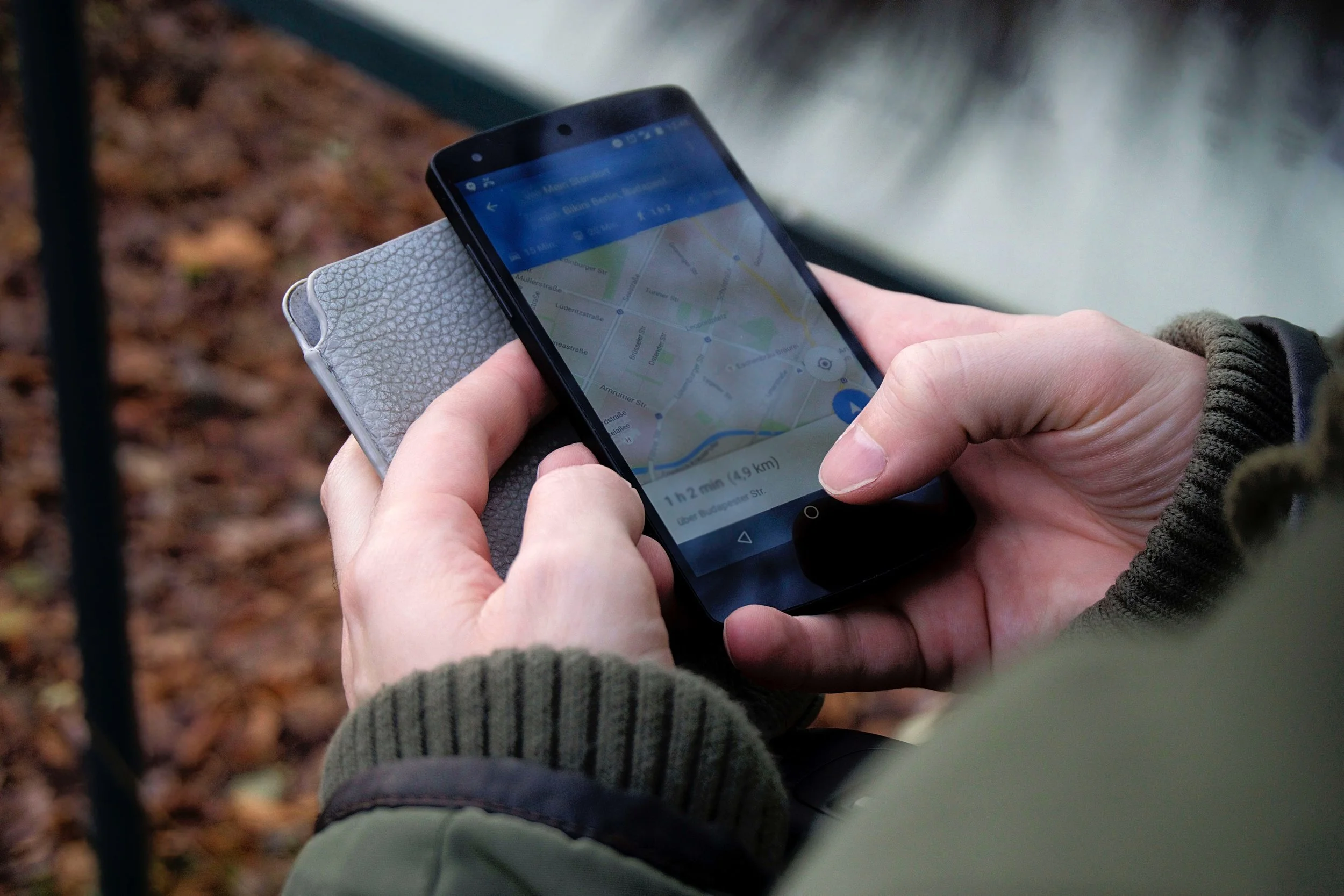
Widely used apps like Facebook, Twitter or Google Maps count millions of users and are already deeply entrenched in our daily social life. However, while we know that mobile map applications are used quite often, we know very little about how they are used

By Timo Hannay
Here's a multiple-choice question: Is the internet (a) the most open, egalitarian and empowering means of communication ever devised, or (b) a dystopian nightmare populated by hucksters, trolls and miscellaneous abusers of human rights? The answer is, of course, (c) all of the above and much else besides. This stark contrast between the internet's light and dark sides has become a defining characteristic of the digital age, but is not an inevitable consequence of the mostly innocuous technologies on which it's built. Rather, it is the product of their bewilderingly diverse and eccentric user base – otherwise known as humanity.
"The collection of “big data” and the ability to do experiments using the internet, may be the start of a scientific revolution in social research. But there are important ethical considerations that also need to be factored in." says Roby Muhamad in this piece which both praises the innovations big data has been able to allow us to explore and puts caution to the wind for the future of what these advances may entail.
Qualitative Data Collection

Do you have concerns about how to carry out data collection with vulnerable populations online? Find research strategies for reaching vulnerable people online.

Qualitative researchers often collect very personal data, whether in interviews or in narratives, diaries, or other records that depict their experiences. One way to protect their identities is by changing their names, and anonymizing the data.

Dr. Linda Bloomberg explains ways to choose datacollection methods while aligning with the selected qualitative methodology.

Learn about participant observation and read open-access articles that explore this approach to collecting data online or in the field.

Focus groups allow us to hear and learn from what participants say to each other. We can conduct focus groups in-person, or online. In this post, find a collection of open-access articles about focus group methods for collecting data.

Hear Dr. Kozinets discuss the origins and development of Netnography in this interview. See the whole series of posts from Kozinets about collecting data for studies using netnography.

Dig into participants' stories with biographical and life history interviews.

How can you conduct online research with children and youth? Here are some open-access examples.

Find a new open access article with tips for online interviews.

Tips for collecting secondary data online.

What is archival research like in the digital age? When do you need to visit a physical archives and look through paper documents?

Find an open-access guide to archival research and links to archives you can visit online.


Ethnography

Between 2015 and 2022 Paul Atkinson produced four books about ethnography. How and why did that happen, and what did he want to achieve? Learn about this quartet of books.

Ethnography involves the production of highly detailed accounts of how people in a social setting lead their lives, based on systematic and long-term observation of, and discussion with, those within the setting.

Find examples of ethnographic research conducted by more than one scholar.

What does it mean to be central to your research? In this post we are defining a method that asks researchers to be at the center of their studies, and looking for explanations and examples of autobiography.

Learn about unstructured interviews in this post from Dr. Azher Hameed Qamar.

Find a collection of Sage books about ethnographic methods.

Ethnography is a widely used qualitative methodology, growing from roots in anthropology to acceptance in a wide range of disciplines.

Learn about conducting and writing about hybrid ethnography that includes online and offline methods.


More from Robert Kozinets about creating an immersion journal for your netnography project .

Read part 3 of a substantive series of posts about netnography from Robert Kozinets.

In part 2, Robert Kozinets continues to give practical suggestions for research with netnography!

What is an immersion journal and why should netnographers keep one?

Dr. Liz Przybylski introduces an open-access chapter about ethical consideration for online or on-ground ethnography.

Although Indigenous scholars have been documenting Indigenous research methodologies, little has been written on the practical considerations of doing research across Indigenous/Settler contexts. Read these open access articles as part of the Indigenous & Intercultural Research focus this month.


Key points are discussed about two ethnographies that were popular with readers of SAGE journal articles in 2017: “Knowledge of practice: A multi-sited event ethnography of border security fairs in Europe and North America” and “Algorithms as culture: Some tactics for the ethnography of algorithmic systems.”
Mixed Methods

Sample a selection of the most helpful methods videos and guides published in 2024 on the Sage Research Methods online platform with free access.

Let’s use this open-access research case to think through the possibilities and potential problems involved with studying blog posts and online discussions.

Let’s use this open-access research case to think through the possibilities and potential problems involved with studying blog posts and online discussions.

Is it too hard to address problems in our complex world with one type of data? Mixed methods might be the answer. Find explanations and open-access resources in this post.

Learn what to do when you are faced with next steps after coding qualitative data.

Learn about using mixed methods with secondary data.

Researchers who use mixed methods collect both qualitative and quantitative data. In this collection of open-access you will find articles that show how researchers collect two or more types of data.

Researchers who want to collect both qualitative and quantitative data with mixed methods will find this conversation of interest. Drs. Linda Bloomberg and Merle Werbeloff walk through the process of designing and conducting mixed methods studies.

Elizabeth Creamer discusses the selection of a research problem in mixed methods research.

What is case study methodology? It is unique given one characteristic: case studies draw from more than one data source. In this post find definitions and a collection of multidisciplinary examples.

A growing number of social science researchers are shifting to digital methods, but it’s not an easy task, and this has been even more evident in lockdown. We’ve selected 14 software tools that you can start using immediately to run your social or behavioral experiments online.

Dr. Poth has written two winning books. Learn about her strategy!

There’s a lot of uncertainty about how higher education will be taught in the age of COVID-19. How should professors and instructors of qualitative methods courses re-think their curriculums for online classrooms or cohorts? How can students conduct observations if they’re sheltered at home? How will students work in teams to analyze data if they’re distributed across the world? Here are some tips for alternative data collection methods, and collaborative tools for remote analysis.

Thinking about designing a mixed methods study? Find ideas from Dr. Fetters in this interview and recorded webinar.

Dr. Dariusz Jemielniak discusses the importance of mixed methods in Big Data research.
What was most read and cited from the
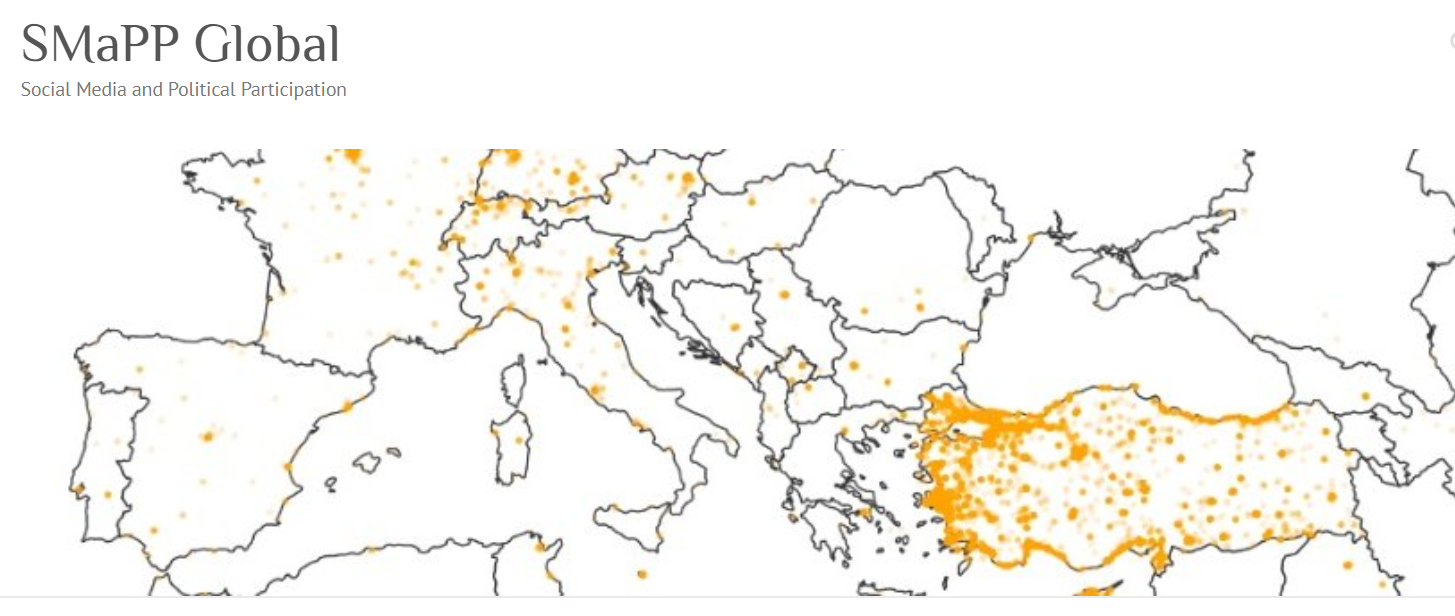
In April this year a special collection examining social media and politics was published in SAGE Open. Guest edited by Joshua A. Tucker and Pablo Barberá, the articles grew out of a series of conferences held by NYU’s Social Media and Political Participation lab (SMaPP) and the NYU Global Institute for Advanced Study (GIAS) known as SMaPP-Global. Upon publication Joshua Tucker said ‘the collection of articles also shows the value of exposing researchers from a variety of disciplines with similar substantive interests to each other's work at regular intervals’. Interdisciplinary collaborative research projects are a cornerstone of what makes computational social science such an interesting field. We were intrigued to know more so caught up with Josh and Pablo to hear more.
Homelessness is a major problem in many global cities, and research on the issue recognizes that urban aspect. But homelessness is not just a problem for cities, as criminologist Michael Young describes in this Methods in Action interview. Young describes his experiences conducting this research, details some of the nuts and bolts of his mixed methods approach, and explains how geography mediates culture in ways that wise researchers need to understand.
Learn about research with online Experiments from Dr. Giuseppe Veltri.