
Find a post
Teaching Methods

Listen to this interview, and check out Rhys Jones’ latest book: Statistical Literacy: A Beginner's Guide.
This blog is the seventh, and penultimate post, in a follow-on to our 2021 “The future of computational social science is Black” series, about a Summer Institute in Computational Social Science organized by Howard University and Mathematica. It continues to bring the power of computational social science to the issues of systemic racism and inequality in America. This marks the third iteration of the successful SICSS model being hosted by a Historically Black College or University.
This blog post is the sixth of eight in a follow-on to our 2021 “The future of computational social science is Black” series, about a Summer Institute in Computational Social Science organized by Howard University and Mathematica. It continues to bring the power of computational social science to the issues of systemic racism and inequality in America. This marks the third iteration of the successful SICSS model being hosted by a Historically Black College or University.
Latanya Sweeney, scholar of technology science, Daniel Paul Professor of the Practice of Government and Technology at the Harvard Kennedy School and in the Harvard Faculty of Arts and Sciences, and director and founder of the Public Interest Tech Lab, delivered the keynote address for SICSS-Howard/Mathematica 2023.
This blog post is the fifth of eight in a follow-on to our 2021 “The future of computational social science is Black” series, about a Summer Institute in Computational Social Science organized by Howard University and Mathematica. It continues to bring the power of computational social science to the issues of systemic racism and inequality in America. This marks the third iteration of the successful SICSS model being hosted by a Historically Black College or University.
This blog post is the fourth of eight in a follow-on to our 2021 “The future of computational social science is Black” series, about a Summer Institute in Computational Social Science organized by Howard University and Mathematica. It continues to bring the power of computational social science to the issues of systemic racism and inequality in America. This marks the third iteration of the successful SICSS model being hosted by a Historically Black College or University.
Jump to

Methods Minute Newsletter
Sign up to be the first to know about the latest news and events
Online Learning

Professor Julie Scott Jones discusses lessons learned from teaching quantitative research methods online.

The steps you take to prepare for a videoconference presentation or meeting will make the difference between an engaging or a frustrating experience.


MethodSpace contributor completed his dissertation. He offers tips to students and academic writers.


Teaching and learning online: new podcasts, tips, and a book.

Use more than one approach to keep online learners engaged!

Help struggling students and keep them engaged.

Make e-learning accessible!

Dr. Ravitch suggests pedagogical thinking for online teaching and learning in the midst of a crisis.
Teaching online? Use these free resources for online research activities that will engage your students.

In June and July 2020 MethodSpace focused on research-oriented careers including career purpose and goals, skills, as well as expected and unexpected transitions. Surely we need people who understand the dynamics of making peace and negotiating across conflicts?

Now that more meetings are online using videoconferencing. This guest post by Lydia Hooper.
This white paper aims to contribute to the small but growing body of literature on best practice and tips for developing curricula and teaching social research methods and data science online by sharing experiences of the team who developed SAGE Campus.
Initiated by Deborah Lupton, this crowdsourced document provides necessary information and key resources for researchers struggling to conduct traditional face-to-face research under new circumstances. Check out: "Doing Fieldwork In A Pandemic."
The call for ‘social distancing’ in the wake of the coronavirus and its attendant COVID-19 disease has seen schools and universities around the world hurriedly attempting to turn their physical classrooms into virtual ones. While this may be best immediate reaction from an epidemiological point of view, from a pedagogic perspective, it has left instructors desperately trying to retrofit and reformat their courses while trying not to unduly disadvantage large numbers of their students. As a means of supporting those attempting to do their best under trying circumstances, SAGE Publishing has drawn from its large body of published and peer-reviewed research to offer the resources below -- free of charge -- to serve teachers and students around the world.
Find yourself teaching online? MethodSpace offers guidance and open access resources for e-learning & methods instruction.

Walk through an example using Dr. Salmons’ eight-step process for teaching with research cases.
Help your students develop research skills, even when you are not teaching research classes.

Diversity, Equity, & Inclusion

Deaf scholars are flipping the script in academic publishing—highlighting the power of signed languages, challenging outdated views, and creating space for real representation through the Society of American Sign Language Journal.

Access new webinar on conducting research with historically marginalized communities, featuring Dr. Shotonda S. Jones (St. Bonaventure University) and Dr. Shantoyia (Toy) Jones (Xavier University of Louisiana).

Decolonizing research methods means rethinking how we look at participants and problems. In the digital world there are even more ways the European West exerts cultural, economic, and political control. At the same time, the digital world allows researchers to conduct studies across the distances.

Co-authors share about a topic of decolonial research, privilege, and ethics. They write this piece in two parts, narrating their understanding of the experience and how it relates to power hierarchies and researcher responsibility.

Chart research directions that take you to the roots of the problem. Learn more in this guest post from Dr. Donna Mertens.

These difficult times present challenges for researchers. Find five original posts by Robert Kozinets about using Netnography to study sensitive topics.

Read this collection of multidisciplinary articles to explore epistemological questions in Indigenous research.

This year we need to honor Martin Luther King's legacy with both reflection and action! In this post, find links to lots of original source materials, including documents and recordings.

Caroline Lenette offered a keynote address at the International Creative Research Methods conference, September 2023. See the address and learn about the 2024 conference here.

Safary Wa-Mbaleka, Arceli Rosario, and Anna Cohen Miller discussed opportunities and challenges for global researchers and academic writers in this roundtable discussion.
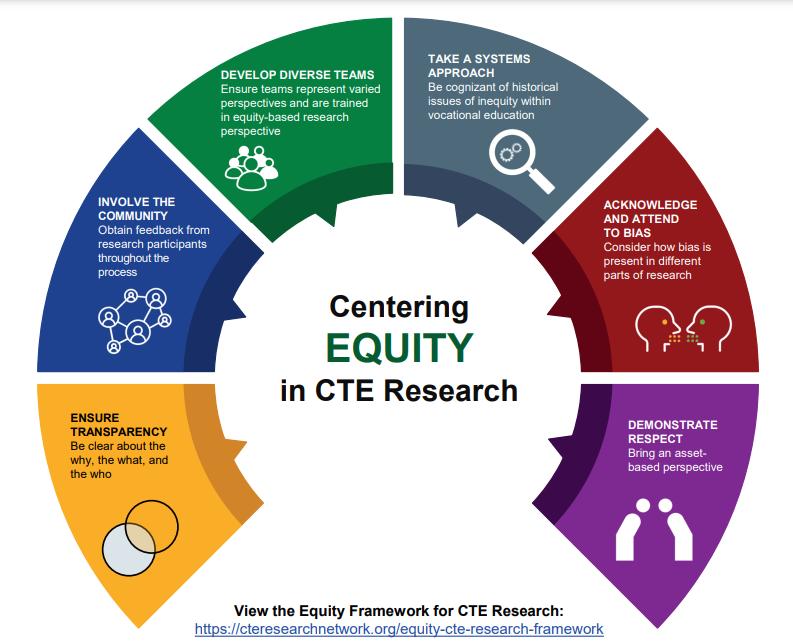
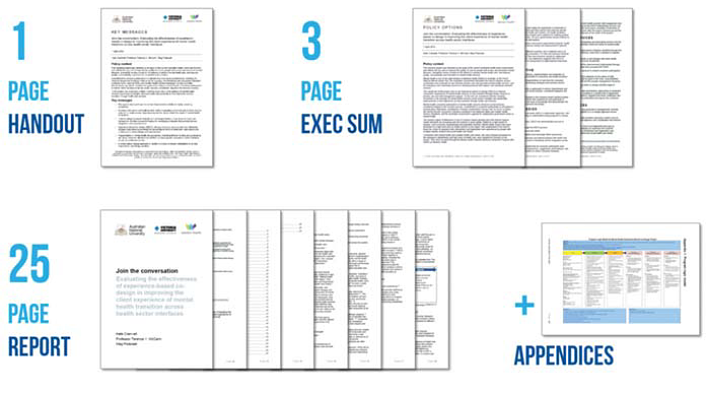
Learn about disseminating research with an equity lens in this guest post from the CTE Research Network Equity Working Group.

Given the difficulties that emerged with the global Covid pandemic, the European Commission funded the PREPARED project. The aim of the project is to develop an ethics and integrity framework to guide researchers working to prevent and address large-scale crises. Find meeting reports, recordings, and related posts.
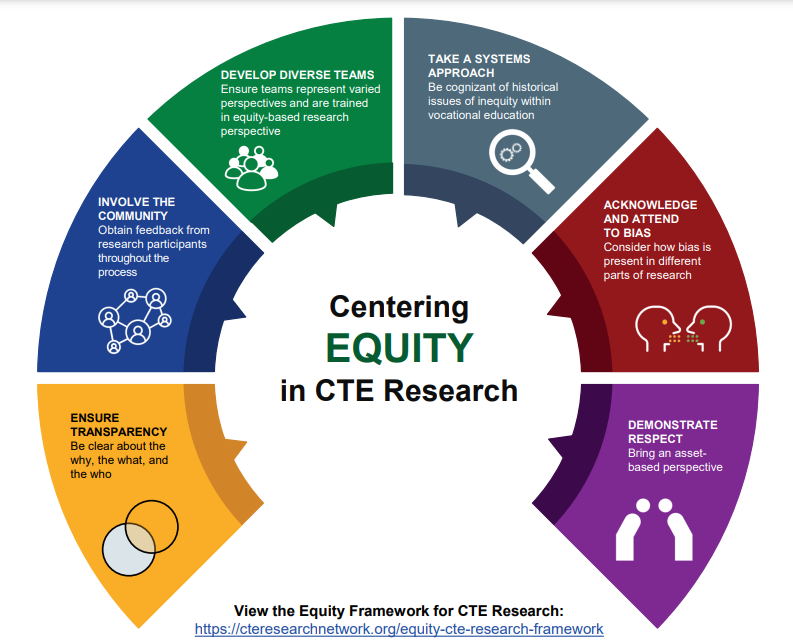
The Career and Technical Education (CTE) Equity Framework approach draws high-level insights from this body of work to inform equity in data analysis that can apply to groups of people who may face systemic barriers to CTE participation. Learn more in this two-part post!
The Career and Technical Education (CTE) Equity Framework approach draws high-level insights from this body of work to inform equity in data analysis that can apply to groups of people who may face systemic barriers to CTE participation. This is part 2, find the link to part 1 and previous posts about the Equity Framework.

Some of us feel that technology is everywhere, but that is not the case for everyone. Inequalities persist. What do these disparities mean for researchers?

Experienced global researchers Safary Wa-Mbaleka and Anna Cohen Miller discuss social justice and qualitative research.

In this roundtable discussion moderated by Janet Salmons, Research Community Manager for Sage Methodspace, Marc Spooner (Canada), Nicole Brown and Áine McAllister (UK), Natalia Reinoso Chavez (Colombia) and Consuelo Chapela (Mexico) discuss constraints on academic freedom and recommendations for researchers.

Why does identity matter in the methods classroom?
How to look at data collection using an Equity Framework for CTE Research, which provides principles and practices for researchers on equity questions, designs, and implications throughout the research process.

Find a multidisciplinary collection of scholarly and historical articles about Juneteenth.
The first Summer Institute in Computational Social Science held at a Historically Black College or University, returns to Howard University for its two-day pre-institute, Praxis to Power for graduate students, postdoctoral researchers, and beginning faculty who needed more time to practice computational methods.


The goals for this collaborative feminist research project were to bring together scholars who had critical methodological lenses, focusing our study through a collaborative feminist methodological lens to explore and address gender-based inequities in higher education institutions. Find the open-access book and toolkit the co-authors created.

Decolonisation is not a peripheral but central concern to social research for change. Learn more from Caroline Lenette, author of Participatory Action Research: Ethics and Decolonization.
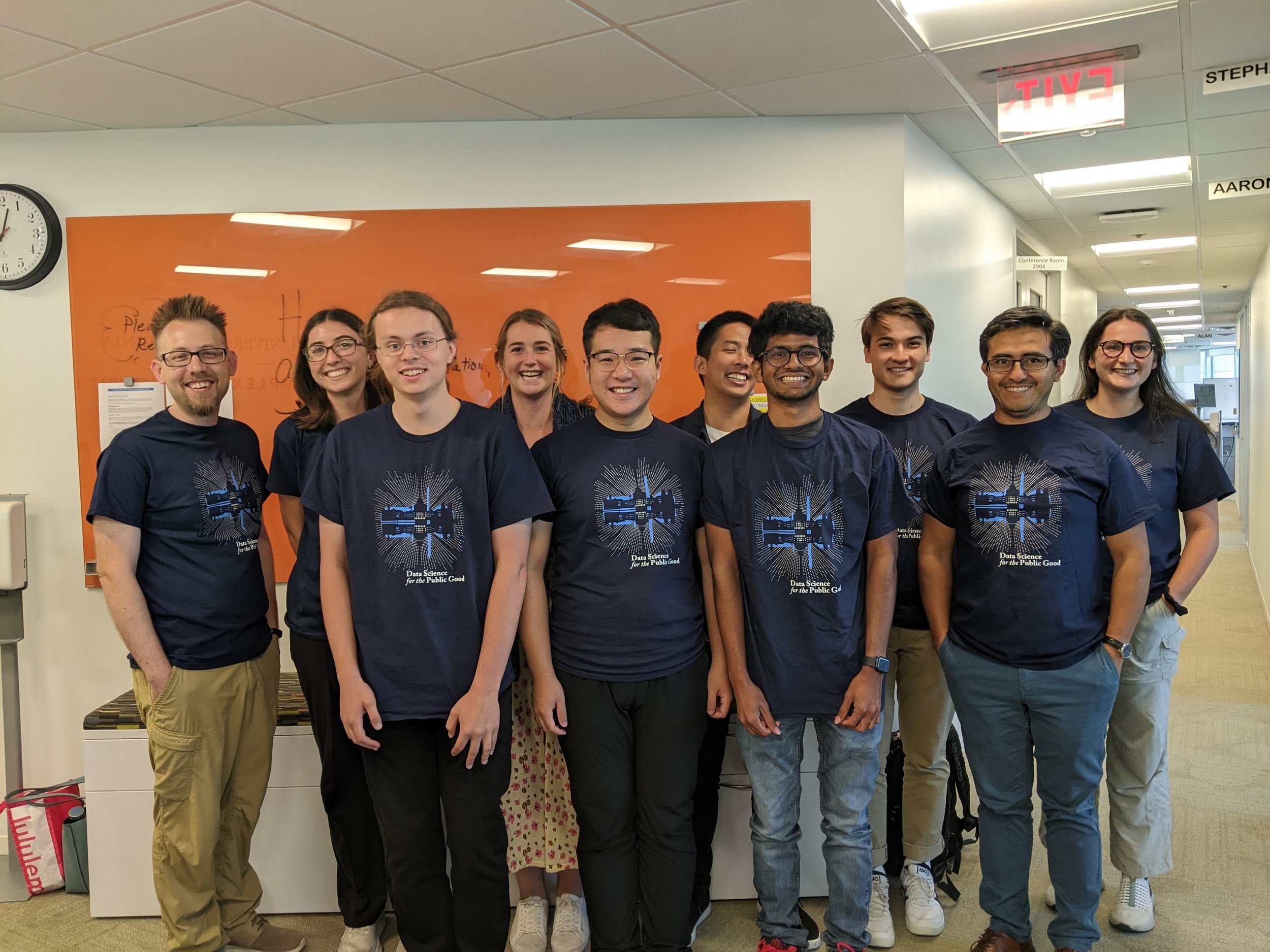
In this Methodspace interview Dr. Joel Thurston and Dr. Cesar Montalvo tell us about how data science can be used for social good, and how their program for young scholars is cultivating a next generation of data scientists.
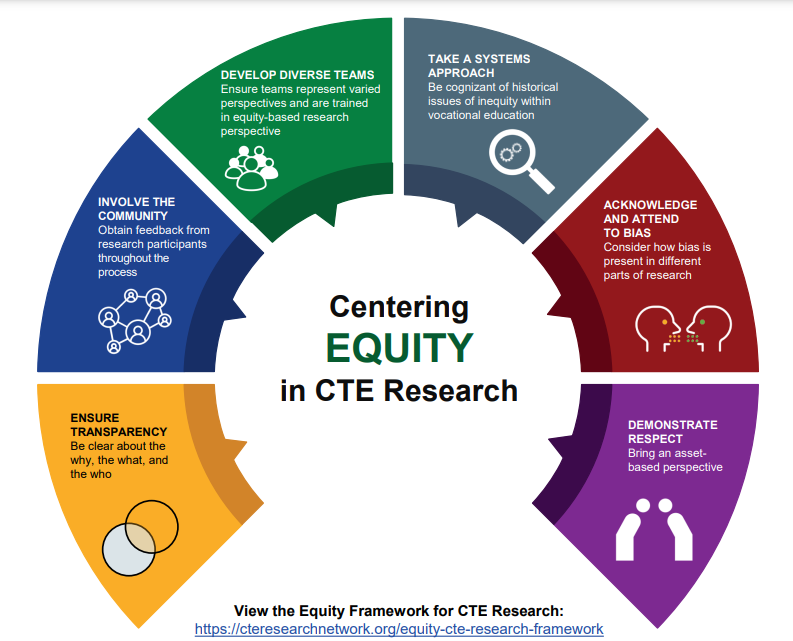
For researchers interested in incorporating equity into their work, it all starts at the very beginning with designing the study. Learn more in this guest post!
Summer Institutes in Computational Social Science
This blog post is the eighth, and final, post in a follow-on to our 2021 “The future of computational social science is Black” series, about a Summer Institute in Computational Social Science organized by Howard University and Mathematica. It continues to bring the power of computational social science to the issues of systemic racism and inequality in America. This marks the third iteration of the successful SICSS model being hosted by a Historically Black College or University.
This blog is the seventh, and penultimate post, in a follow-on to our 2021 “The future of computational social science is Black” series, about a Summer Institute in Computational Social Science organized by Howard University and Mathematica. It continues to bring the power of computational social science to the issues of systemic racism and inequality in America. This marks the third iteration of the successful SICSS model being hosted by a Historically Black College or University.
This blog post is the sixth of eight in a follow-on to our 2021 “The future of computational social science is Black” series, about a Summer Institute in Computational Social Science organized by Howard University and Mathematica. It continues to bring the power of computational social science to the issues of systemic racism and inequality in America. This marks the third iteration of the successful SICSS model being hosted by a Historically Black College or University.
Latanya Sweeney, scholar of technology science, Daniel Paul Professor of the Practice of Government and Technology at the Harvard Kennedy School and in the Harvard Faculty of Arts and Sciences, and director and founder of the Public Interest Tech Lab, delivered the keynote address for SICSS-Howard/Mathematica 2023.
This blog post is the fifth of eight in a follow-on to our 2021 “The future of computational social science is Black” series, about a Summer Institute in Computational Social Science organized by Howard University and Mathematica. It continues to bring the power of computational social science to the issues of systemic racism and inequality in America. This marks the third iteration of the successful SICSS model being hosted by a Historically Black College or University.
This blog post is the fourth of eight in a follow-on to our 2021 “The future of computational social science is Black” series, about a Summer Institute in Computational Social Science organized by Howard University and Mathematica. It continues to bring the power of computational social science to the issues of systemic racism and inequality in America. This marks the third iteration of the successful SICSS model being hosted by a Historically Black College or University.
This blog post is the third of eight in a follow-on to our 2021 “The future of computational social science is Black” series, about a Summer Institute in Computational Social Science organized by Howard University and Mathematica. It continues to bring the power of computational social science to the issues of systemic racism and inequality in America. This marks the third iteration of the successful SICSS model being hosted by a Historically Black College or University.
This blog post is the second of eight in a follow-on to our 2021 “The future of computational social science is Black” series, about a Summer Institute in Computational Social Science organized by Howard University and Mathematica. It continues to bring the power of computational social science to the issues of systemic racism and inequality in America. This marks the third iteration of the successful SICSS model being hosted by a Historically Black College or University.
This blog post is the first of eight in a follow-on to our “The future of computational social science is Black” series, about a Summer Institute in Computational Social Science organized by Howard University and Mathematica. It continues to bring the power of computational social science to the issues of systemic racism and inequality in America. This marks the third iteration of the successful SICSS model being hosted by a Historically Black College or University.

Daniel Lobo shares four learnings from his unforgettable experience at SICSS-Howard/Mathematica 2022.

UDC Assistant Professor, Andrea Adams, talks about their experience during SICSS-Howard/Mathematica 2022.

Hear from the 2021 SICSS-Howard/Mathematica Excellence in Computational Social Science Research Fund awardees about how the funding helped their projects and their future plans.

At SICSS-Howard/Mathematic 2022 two group projects and five individual projects received the Inaugural Excellence in Computational Social Science Research Award.

At SICSS-H/M 2022, Anthony Wutoh, Yahya Shaikh and Carter Clinton discussed how to bridge the diversity gap in biomedical research and the need for interdisciplinary collaboration.

LaVerne H. Council spoke at the Closing Plenary of SICSS/Howard-Mathematica 2022, emphasizing the importance of seeking wisdom and truth through data and fair & effective policymaking.

Paula Moreno, founder of Manos Visibles & first Afro-Colombian woman to serve as Minister of Culture of Colombia, delivered the first SICSS-Howard/Mathematica Motivational Address, focused on the technological challenges and solutions for Africans and people of African descent around the world.

Speakers at SICSS-Howard/Mathematica 2022 explore how change does not affect populations equally, and how the exclusion of underrepresented communities can perpetuate social injustice.

Bite-Sized Lunchtime Talks (BSLT) are a SICSS-Howard/Mathematica site-specific innovation that introduces participants to organizations doing cool things with data. 2022 offered a variety of organizations that proved interesting and inspiring to our participants.

Dr. Safiya Noble speaks about her journey as a critical race scholar, her research on the racist and sexist dynamics of search engines, and the importance of community.
The first Summer Institute in Computational Social Science held at a Historically Black College or University, returns to Howard University for its two-day pre-institute, Praxis to Power for graduate students, postdoctoral researchers, and beginning faculty who needed more time to practice computational methods.
Summer Institute in Computational Social Science site sponsored by Howard University and Mathematica (SICSS-Howard/Mathematica) awards individuals and teams for the inaugural Excellence in Computational Social Science Research Fund as a unique and exclusive benefit offered to alumni of the site.

A SICSS-Howard Mathematica 2021 participant shares how he reconnected with others in a meaningful way and grew personally during his virtual SICSS experience.

Paul Decker PhD, president and chief executive officer of Mathematica and nationally recognized expert on policy research, delivered the closing plenary address on Friday, June 25th at SICSS-Howard/Mathematica 2021.

Timnit Gebru, co-founder of Black in AI, advocate for diversity in the field of technology, and Fortune’s Top 50 Leaders in the World in 2021 delivered the keynote address for SICSS-Howard/Mathematica 2021.
The first Summer Institute in Computational Social Science hosted at a Historically Black College or University featured a panel of guest speakers who inspired participants with their research and professional trajectory. Lecture topics include re-entry into the job force for incarcerated people, financial statuses of small businesses in relation to the COVID-19 pandemic, social identities and systems of power, and discriminatory bias within technology.

SICSS-Howard/Mathematica participants had the benefit of novel Bite-Sized Lunchtime Talks during the inaugural SICSS at a Historically Black College or University. The purpose of this SICSS-H/M specific site innovation was to introduce participants to people and organizations doing impactful and complementary work with data.

Wayne A.I. Frederick, seventeenth president of Howard University, delivered the opening plenary address on Sunday, June 13th at the end of SICSS-Howard/Mathematica 2021’s pre-institute, Praxis to Power.

This blog post is the second of nine in a series called “The Future of Computational Social Science is Black” about SICSS-Howard/Mathematica 2021, the first Summer Institute in Computational Social Science held at a Historically Black College or University.
This blog post is the first of nine in a series called “The future of computational social science is Black” about SICSS-Howard/Mathematica 2021, the first Summer Institute in Computational Social Science held at a Historically Black College or University. As you go through this package of blogs you will experience the journey we took in 2021.

Continuing our series on the Summer Insitute in Computational Social Science, Joshua Becker traces his SICSS journey.
Before I get into this, you should know I’m a network researcher. So even though this is ostensibly about a summer program, it’s also about networking. I almost didn’t participate in the Summer Institute in Computational Social Science, or SICSS as I now know it fondly. At the time, I thought it was just about learning the skills — and I felt I had a solid methods foundation — and mainly just applied because it seemed like the kind of thing I was supposed to do as a grad student. Having never previously seen the gorgeous Princeton campus, I imagined the trip itself as little more than spending two weeks in suburban New Jersey rather than at home with my wife. Luckily, I applied. And luckily, I was accepted. Mileage may vary, but I made out well on the deal.

Summer Institute in Computational Social Science (SICSS) Istanbul was originally conceived in Oxford and Helsinki. Our co-organizer, Akin Unver, and the principal data scientist tutor, Ahmet Kurnaz of SICSS-Istanbul met at Oxford University in 2017 during their joint research project on how best to use data science to gather data from hard-to-access regions such as disaster areas or war zones. From this project arose the need to launch a data science summer school in Istanbul. Our teaching assistant (Yunus Emre Tapan) was then a participant at the SICSS-Helsinki, run by our other co-organizer, Matti Nelimarkka, and also discussed the possibility of launching an Istanbul chapter. Later in 2018, Akin and Emre met at the International Studies Association annual meeting for the first time and agreed to launch SICSS-Istanbul.
This blog post is the eighth, and final, post in a follow-on to our 2021 “The future of computational social science is Black” series, about a Summer Institute in Computational Social Science organized by Howard University and Mathematica. It continues to bring the power of computational social science to the issues of systemic racism and inequality in America. This marks the third iteration of the successful SICSS model being hosted by a Historically Black College or University.