
Find a post
Tools & Technology

Throughout your research journey, leveraging digital tools can be advantageous, aiding you from initial planning to final presentation. Whether you lean towards paper-based methods or embrace a hybrid approach combining both digital and traditional tools, this blog post from Kelly Trivedy offers insights to help you explore and experiment with new tools effectively!

How can you use data science in social science research? Find an interview with the Oxford Internet Institute’s Dr. Bernie Hogan and lots of useful resources in this post.

ACEP is an R package designed specifically for content analysis in Spanish. Learn about it and download the package.
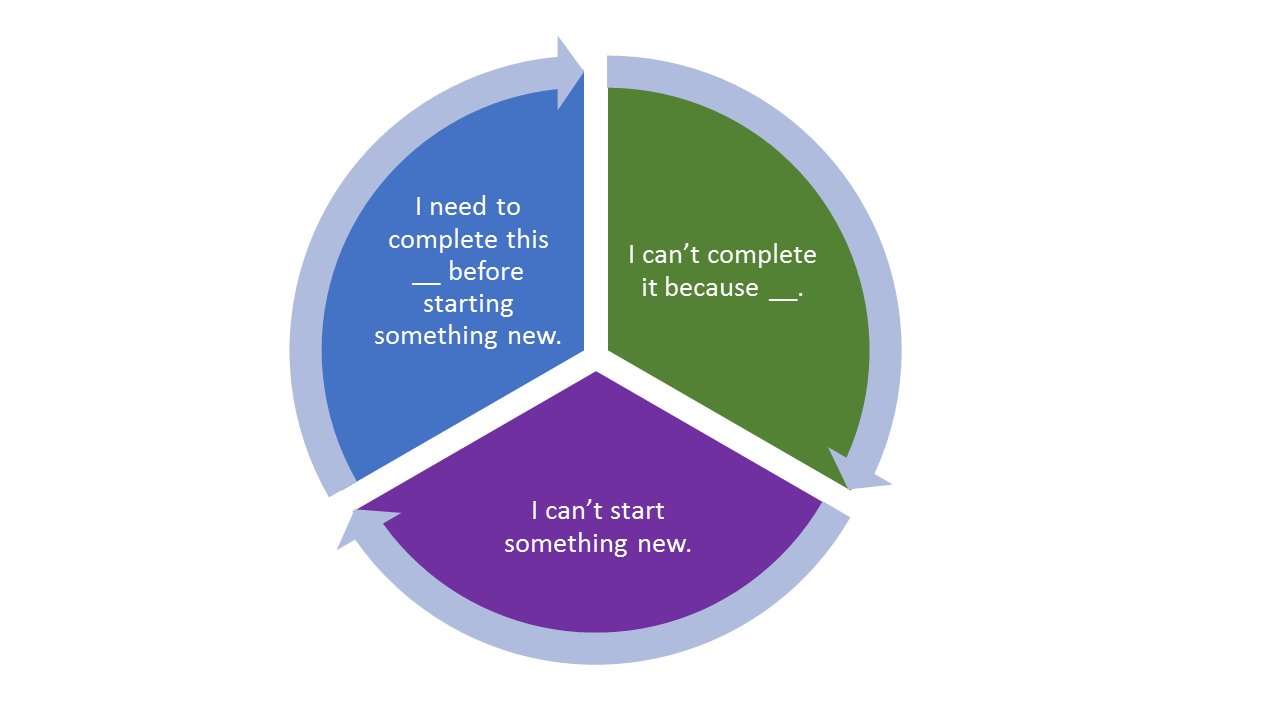
Look candidly at your unfinished project. Is it a stepping stone, and completion will be allow you to move ahead? Or is it an obstacle that prevents you from moving forward? Find ideas to help you determine whether to revive that piece of writing or let it go.

Have a writing project that is languishing? Find practical tips for keeping it alive!
Jump to

Concept Grants from Sage 2021
Six new software tools supporting research methods in the social sciences were awarded Concept Grants from Sage.

Monthly Focus
Check out our upcoming
monthly themes
Concept Grants from Sage
Introducing the Teaching category winner for the 2024 Concept Grants from Sage: The Media Education Research Lab (MERL) at UC Berkeley develops tools and methods to teach students how to critically assess diversity in film and television, promoting media literacy and nuanced analysis.
Introducing the Doing Research category winner for the 2024 Concept Grants from Sage: Y: The Home of LLMs is a versatile digital twin platform that simulates social media dynamics using LLMs, allowing researchers to explore and test social scenarios with realistic, customizable synthetic data.
Introducing the Learning category winner for the 2024 Concept Grants from Sage: educate_R suite simplifies advanced data analysis for social science students and researchers, offering intuitive tools like Data Distillery for data cleaning and visualization.

Annotiva, a 2023 Sage Concept Grant recipient, gives an update on the development of their AI-assisted tool to enhance qualitative coding by predicting ambiguities and improving collaboration among novice researchers.
Catch up with Gorilla’s Shop Builder 2. Developed after receiving the 2023 Sage Concept Grant, it features a modular design, mobile compatibility, skinnability, and improved customization, enhancing researchers' flexibility and user experience.
BigKnowledge's BoKMap platform transforms mapping principles into a "GPS for knowledge," visualizing unstructured text data in a map-like form, aiding in document exploration and discovery across various domains. Read more for an update on ths 2023 Concept Grant winning project.
We check in with GailBot, the £15k Concept Grant winner. Combining ASR and ML to capture paralinguistic features, GailBot has been revamped for wider researcher use. After a week-long UCLA hack session, we’re addressing internationalization and user-driven feature requests, ensuring scalable and versatile transcription. Join our Slack Community for updates!

The Shop Builder is a unique product that allows researchers to easily create a simulated and interactive online shop to study consumer behaviour.
Qualitative researchers face ongoing challenges in consistently identifying and addressing potential ambiguity in collaborative data annotation processes. Annotiva can help.
Swara is a web-based/mobile self-completion survey software/application that utilizes voice user interface technology.
GailBot is an automated dialogue transcription tool that uses machine learning and heuristics to annotate essential paralinguistic details of talk such as overlaps, sound stretches, speed changes, and timed silences.

The "Swahili Lexicon for Sentiment Analysis" project, funded by a Sage Concept Grant, aims to develop and test a Swahili Lexicon annotated by native Swahili speakers for text mining, particularly sentiment analysis.

Learn about a Sage Concept Grant winner: Automated Video Analysis software (or AUVANA for short) is an open-source annotation tool for social scientists whose research involves analyzing and annotating videos.

Causal Map is a web app dedicated to causal qualitative data analysis. Learn more about this open-access tool, winner of a Sage Concept Grant.

SAGE Publishing is inviting applications for the 2022 SAGE Concept Grant, which provides funding for new software tools for social science research.


Interested in applying for a SAGE Concept Grant? We’ve put together the following advice for applicants based on our feedback for previous years’ applicants, and the criteria we’ll be using to judge this year’s applications.

Watch the webinar recording and read the follow-up blog from our webinar with SAGE 2020 Concept Grant winner, Andrew Lovett-Barron, on how to design trust relationships with participants in research using Knowsi.

There’s a validity problem with automated content analysis. In this post, Dr. Chung-hong Chan introduces a new tool that provides a set of simple and standardized tests for frequently used text analytic tools and gives examples of validity tests you can apply to your research right away.

SAGE Concept Grant winner Dr Nechama Brodie introduces the Homicide Media Tracker, a tool currently under development that will enable the collection, curation and analysis of crime data in media. Why is it needed? What kind of data will the tool be able to collect? And what insights can this data afford researchers?

Media reports are a valuable source of crime data that can be used to supplement police and judicial records. Nechama Brodie explains the challenges and opportunities of working with this type of data, and introduces a new tool concept for the collection and analysis of homicide data.

Virtual reality offers a realistic and controlled research environment, presenting an opportunity for the future of valid and reliable research in the social sciences. This blog introduces a new tool that enables real-time experience measurement in VR, under development with support from the SAGE Concept Grant.
Social Media

Academic blogging- what is it and how can it be a part of your publication strategy?

The 2020 SAGE Ocean Concept Grant program drew over 140 applications from all over the world. In this blog post, we’re giving you an insight into our judging criteria and sharing the most common reasons why applications did not progress further, to serve as feedback for this year’s applicants and guidance for future applicants.

Our study, whose preliminary results we recently presented at the 2019 SISP (Italian Political Science Association) Conference, examines the visibility of the tweets posted by Italian political leaders during the last EU Elections campaign. We show how crowd-sourced and spontaneous political action, triggered by a social media game, can take an almost social bot-like nature and significantly boost the visibility of tweets by political leaders during a major political event.

Today, researchers are using LinkedIn data in a variety of ways: to find and recruit participants for research and experiments (Using Facebook and LinkedIn to Recruit Nurses for an Online Survey), to analyze how the features of this network affect people’s behavior and identity or how data is used for hiring and recruiting purposes, or most often to enrich other data sources with publicly available information from selected LinkedIn profiles (Examining the Career Trajectories of Nonprofit Executive Leaders, The Tech Industry Meets Presidential Politics: Explaining the Democratic Party’s Technological Advantage in Electoral Campaigning).

Social media has brought about rapid change in society, from our social interactions and complaint systems to our elections and media outlets. It is increasingly used by individuals and organizations in both the public and private sectors. Over 30% of the world’s population is on social media. We spend most of our waking hours attached to our devices, with every minute in the US, 2.1M snaps are created and 1M people are logging in to Facebook. With all this use, comes a great amount of data.

Zoufan posted her last words on Weibo on 18, March, 2012. She was suffering from a major depressive disorder, and shortly after - committed suicide. Weibo is a microblogging application, launched by Sina Corporation back in 2009, based on user relationships to share, disseminate and get information. In essence, it is similar to Twitter, although it has a number of other useful capabilities. The app has more than 400 million users (compared to Twitter’s 300 million) and features that enable the study of emotional states and responses to the topics being discussed or spread across the web.

Human social behavior has rapidly shifted to digital media services, whether Gmail for email, Skype for phone calls, Twitter and Facebook for micro-blogging, or WhatsApp and SMS for private messaging. This digitalization of social life offers researchers an unprecedented world of data with which to study human life and social systems. However, accessing this data has become increasingly difficult.

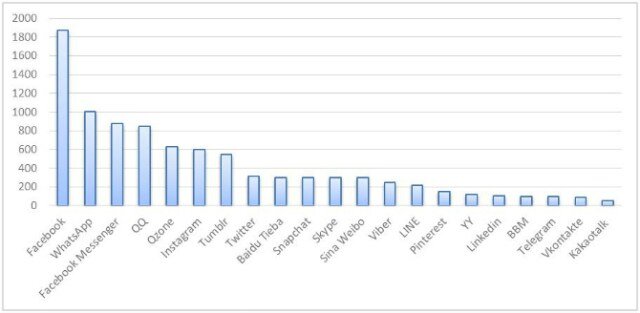
Wasim Ahmed helps find the best research tool available for analyzing data appeared on social media while also offering tips and examples of using certain tools. He also points to twitter as the best social media site to extract data due to its unique platform to attract not only industry but academics.

Although platforms such as Facebook and WhatsApp have more active users, Twitter’s unique infrastructure and the near-total availability of its data have ensured its popularity among researchers remains high. In this post from the LSE Impact of Social Sciences blog, Wasim Ahmed offers his rundown of the tools available to social scientists looking to analyse social media data.
Virtual Reality
Virtual reality offers a realistic and controlled research environment, presenting an opportunity for the future of valid and reliable research in the social sciences. This blog introduces a new tool that enables real-time experience measurement in VR, under development with support from the SAGE Concept Grant.

At the end of February we ran a most enthralling event experience. Three panelists, two hosts and about 20 attendees all put their headsets on from their labs, offices and homes to join a virtual classroom decorated with trees, a castle, a slightly scary tiger and a hippo, to talk about the future of VR in social science research.

This blog post outlines what headsets you can use for our next event.
There are currently 3 types of hardware to access visually and audio-immersive experiences: headsets that connect to your PC, headgear that works with your mobile phone, and standalone devices. Besides varying in price, they also differ in their capabilities and hence are intended for different use cases.

Virtual Reality technology is opening previously locked doors to researchers in the social sciences. But how viable is it really as a research tool? We take a look back over the history of experimental research in human perception and response to consider the future of VR in experimental design.

To learn more about the potential for VR to transform data visualization, Katie Metzler worked with SAGE colleagues, Diana Aleman and Andrew Boney and the team at Datavized, a startup based in New York City, on a project to turn data from one of SAGE’s data products, SAGE Stats, into a 3D VR experience.
Artificial Intelligence

Rapid advancements in Artificial Intelligence have instigated introspection across the data visualisation field. Though swathes of AI discourse are characterised by hype and gimmickry, if you cut through the noise, it’s clear we are facing a significant new era of technological progress. It’s time to evolve, or die, as the saying goes. But what should our relationship with AI be, particularly with generative AI? To what extent could our authentic craft be usefully augmented by an artificial one?

The new AI tools for conducting a literature review provide a remarkable resource both for professional researchers and students. They can rapidly scan millions of papers, provide digests and summaries in seconds, link cognate literature, and even draw maps of the literature showing how one piece relates to another.

Nesta launched the Centre for Collective Intelligence Design back in 2018 at an event jointly hosted by SAGE Publishing. The event featured talks, workshops and discussions exploring the development of collective intelligence as its own field, bridging the worlds of academia and industry together to create a new look domain. October 2019 saw the return of this one day event, jam packed with interactive sessions and an array of attendees from tech to the arts, data science to critical thinking and beyond.

With intelligent machines increasingly playing a role in our daily lives, there is a need to involve the public in conversations around the social implications of new technologies. A new public-private initiative to involve citizens in understanding the social implications of AI could unite society under the banner of safeguarding core human values whilst improving AI literacy.

If we were to do a text mining exercise on all the incredible discussions at last week’s conference 100+ Brilliant Women in AI & Ethics, education would beat all other topics by a mile. We talked about educating kids, we had teenagers share their thoughts on AI in poems and essays, and exchanged views on the nuances of teaching ethics in computing and working with large volumes of social data both for computer scientists and experts from other disciplines.

Transcribing can be a pain, and although recent progress in speech recognition software has helped, it remains a challenge. Speech recognition programs, do, however, raise ethical/consent issues: what if person-identifiable interview data is transcribed or read by someone who was not given the consent to do so? Furthermore, some conversational elements aren't transcribed well by pattern recognition programs. What, or who, is really transforming the transcription process, then? What's next for transcription?

AI is susceptible to misuse and has been found to reflect biases that exist in society. Fortunately, there are a number of organizations committed to addressing ethical questions in AI. We list our top 10.

At CogX, the Festival of AI and Emergent Technology, two icons appeared over and over across the King’s Cross location. The first was the logo for the festival itself, an icon of a brain with lobes made up of wires. The second was for the 2030 UN Sustainable Development Goals (SDGs), a partner of the festival. The SDG icon is a circle split into 17 differently colored segments, each representing one of the goals for 2030—aims like zero hunger and no poverty. The idea behind this partnership was to encourage participants of CogX—speakers, presenters, expo attendees—to think about how their products and innovations could be used to help achieve these SDGs.

Earlier this year Allen AI were announced as the winners of the NYU Coleridge Initiative’s Rich Context Competition. The goal of the competition was to automate the discovery of research datasets and the associated research methods and fields of social science research publications. You can find out about all the finalists and their work here.
We caught up with Allen AI to talk about the work and their involvement in this year’s competition.

Jeff Jonas, the world’s foremost expert on entity resolution and the inventor of the original NORA (Non-Obvious Relationship Awareness) technology developed for Las Vegas casinos, brings entity resolution to life. This unique technology (an IBM spin-out) is a purpose built real-time AI for delivering human quality entity resolution – determining “who is who” and “who is related to who” – without training, tuning or experts.

This book will be of particular value to social scientists interested in the political, economic and social dynamics of AI and data-driven technology. It will also be of interest to investigative and data journalists seeking to leverage computational tools.

A few days ago I made a skill for Amazon Alexa. I wrote a performative, conversational script in which a disobedient Alexa is raising questions on gender and makes a feminist critique of conversational technologies.


Nesta confirmed they are to launch a new Centre for Collective Intelligence Design this summer. The centre will seek to harness the potential of Artificial Intelligence (AI) with a particular focus on the combination of human and machine intelligence.
Dr. Daniela Duca

As Senior Product Manager, Daniela works on new products within SAGE, collaborating with startups to help them bring their tools to market. Before joining SAGE, she worked with student and researcher-led teams that developed new software tools and services, providing business planning and market development guidance and support. She designed and ran a 2-year program offering innovation grants for researchers working with publishers on new software services to support the management of research data. She is also a visual artist, with experience in financial technology and has a PhD in innovation management.
You can connect with Daniela on Twitter.

Learn about a new free tool from SAGE!

At the end of last year, Dr. Daniela Duca (Product Manager for SAGE Ocean), hosted a webinar to discuss findings from our white paper on The Ecosystem of Technologies for Social Science Research. Daniela discussed who is developing research tools, who supports and funds them, the challenges they are facing and other trends from more than 400 tools in this space.

Text mining techniques have become critical for social scientists working with large scale social data, be it Twitter collections to track polarization, party documents to understand opinions and ideology, or news corpora to study the spread of misinformation. In the infographic shown in this blog, we identify more than 80 different apps, software packages, and libraries for R, Python and MATLAB that are used by social science researchers at different stages in their text analysis project. We focused almost entirely on statistical, quantitative and computational analysis of text, although some of these tools could be used to explore texts for qualitative purposes.
Today, researchers are using LinkedIn data in a variety of ways: to find and recruit participants for research and experiments (Using Facebook and LinkedIn to Recruit Nurses for an Online Survey), to analyze how the features of this network affect people’s behavior and identity or how data is used for hiring and recruiting purposes, or most often to enrich other data sources with publicly available information from selected LinkedIn profiles (Examining the Career Trajectories of Nonprofit Executive Leaders, The Tech Industry Meets Presidential Politics: Explaining the Democratic Party’s Technological Advantage in Electoral Campaigning).
This blog post outlines what headsets you can use for our next event.
There are currently 3 types of hardware to access visually and audio-immersive experiences: headsets that connect to your PC, headgear that works with your mobile phone, and standalone devices. Besides varying in price, they also differ in their capabilities and hence are intended for different use cases.

‘From text to data - new ways of reading’ was a 2-day event organised by the National Library of Sweden, the National Archives and Swe-Clarin. The conference brought together librarians, digital collection curators, and scholars in digital humanities and computational social science to talk about the tools and challenges involved in large scale text collection and analysis.

Last week, a mix of PhD students, early career and tenured researchers met in Cologne to discuss their latest projects around bias and discrimination on social media, and the algorithms underpinning many of the most pervasive services we use today.

A little over a week ago, I posted a blog celebrating 39 women in computational social science. We knew there would be so many more amazing researchers to add, and the social science community duly delivered, suggesting plenty of women that should also be celebrated. Therefore, rather fittingly on #AdaLovelaceDay we have published an updated list. The number has now more than doubled, and we hope that it is a good start for anyone looking for a supervisor for their PhD, or just wanting to see what other doctoral fellows are working on.

I want to share with you this list of 39 female researchers that are all crushing it in the social sciences and humanities with their innovative use of computational methods and very cool explorations of cutting edge tech. Follow them, read their papers and collaborate!
Partial least squares structural equation modeling (PLS-SEM) enables researchers to model and estimate complex cause-effects relationship models