

Digital DNA: How to map our online behavior
Nowadays, issues related to the diffusion of fake news, rumours, hoaxes, as well as the diffusion of malware and viruses in online social networks have become so important as to transcend the virtual ecosystem and interfere with our businesses and societies. Currently, we are unable to effectively deal with these issues.

Experimenting with data visualization in virtual reality
To learn more about the potential for VR to transform data visualization, Katie Metzler worked with SAGE colleagues, Diana Aleman and Andrew Boney and the team at Datavized, a startup based in New York City, on a project to turn data from one of SAGE’s data products, SAGE Stats, into a 3D VR experience.

Image tagging in SAGE Journals - part one
At SAGE, we recently asked the question how could Cloud Vision APIs be applied to support scholarly publishing? For example, can they be used for new products or product features, to improve the editorial workflow, or to otherwise enhance SAGE operations or quality of life?

SAGE Ocean Speaker Series #3 - How technology fails us, and what we can do about it
SAGE Ocean Speaker Series #3
How technology fails us, and what we can do about it with Keith Porcaro.

4 Steps to Designing an Award-Winning Poster
A good academic conference poster serves a dual purpose: it is both an effective networking tool and a means by which to articulately communicate your research. But many academics fail to produce a truly visually arresting conference poster and so opportunities to garner interest and make connections are lost. Tullio Rossi offers guidance on how to produce an outstanding conference poster, considering the scripting, concept, design, and logistics.

Matthew Salganik: The Open Review of Bit by Bit
Open Review: better books higher sales, and increased access to knowledge

Nesta to set up new Centre for Collective Intelligence Design
Nesta confirmed they are to launch a new Centre for Collective Intelligence Design this summer. The centre will seek to harness the potential of Artificial Intelligence (AI) with a particular focus on the combination of human and machine intelligence.
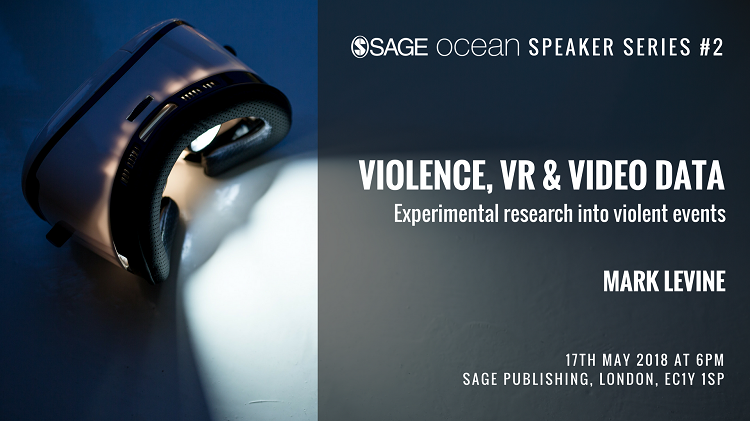
SAGE Ocean Speaker Series #2 - Violence, VR & video data. Experimental research into violent events
SAGE Ocean Speaker Series #2 saw Mark Levine discussing his recent work which includes the use of virtual reality to study the behavior of bystanders in violent emergencies.
Letters as Data
Letters are a unique form of narrative. Learn how to use them in your research.

Humans broke the internet, understanding them better might help fix it
By Timo Hannay
Here's a multiple-choice question: Is the internet (a) the most open, egalitarian and empowering means of communication ever devised, or (b) a dystopian nightmare populated by hucksters, trolls and miscellaneous abusers of human rights? The answer is, of course, (c) all of the above and much else besides. This stark contrast between the internet's light and dark sides has become a defining characteristic of the digital age, but is not an inevitable consequence of the mostly innocuous technologies on which it's built. Rather, it is the product of their bewilderingly diverse and eccentric user base – otherwise known as humanity.
Academic Researchers Need Support and Incentives to Share Data
Making data available for other researchers to find, use, reuse, and reproduce is fundamental to open science, and ultimately makes research more efficient and effective. Yet despite policies that encourage and require data sharing, researchers in the UK and US report lower percentages of data sharing than average.

SSRC launches Social Data Initiative & Facebook provides academics with access to data
Last week marked a milestone for social science and industry partnerships, with Facebook announcing an initiative to give scholars access to its data in order to help them assess social media’s impact on elections.
