Guest post by Kyra van Weenen, Commissioning Editor for Sage Research Methods
In the below guest post, Kyra van Weenen, Commissioning Editor for Sage Research Methods explores the unique concept behind Sage’s flagship Research Methods Case Studies, and how they support researchers and students in conducting their own research.
What do you do when you need to suddenly redesign your field research in rural Cambodia, realizing that participants with limited literacy are not able to complete your consent forms? How do you conduct meaningful interviews with participants inside a prison when the only available spaces turn out to be noisy corridors and cramped cells? How did a researcher go about tracking down 100+ former participants from a cohabitation study, 15 years later, when many of them moved across states, changed careers or changed their names after marriage?
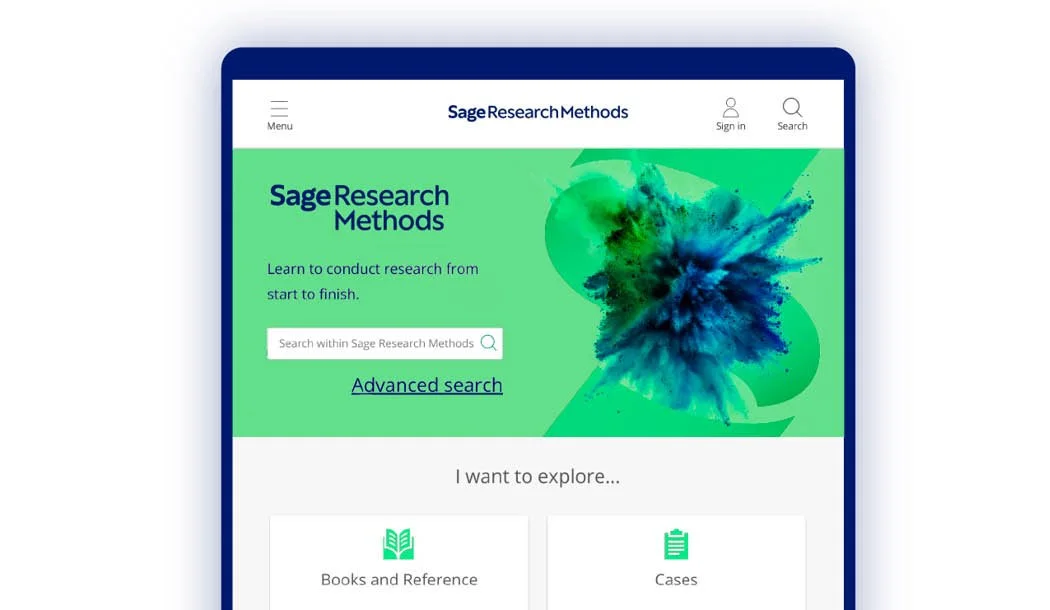
Since their release back in 2014, Sage Research Methods Case Studies have concerned themselves with all the different types of on-the-ground challenges and realities that emerge in social science research. These firsthand narratives, written with other researchers in mind, pass on lessons about how a chosen research method or design worked out in practice – and what did not go to plan at all. The structure is simple, the content all the more rich: authors describe the original idea behind their research, break down the research design while sharing valuable detail on the unexpected hurdles and obstacles they faced and how they decided to handle them. Case Studies have remained a core component of Sage Research Methods (SRM) multi-media collection releases throughout the years and earned SRM a place in the list of Choice Magazine’s Outstanding Academic Titles of 2018. What makes these real-world, ‘warts and all’ narratives of past research projects such a valuable learning resource?
Sage’s Vice President for Books & Social Science Innovation Katie Metzler was responsible for the content strategy and innovation of Sage Research Methods at the time that the first Case Studies collection was launched. She recalls a clear demand for Research Methods materials that would prepare students for the realities of the research process in practice, to complement the more ‘sanitised’ or ‘how-to’-presentation of research methods in conventional publications like textbooks and journal articles. ‘Working with academics who authored books at Sage, I often heard stories about the practical problems arising in their research, like the difficulties they faced once they were in the field or times they lost all their research data. It showed that research really isn’t a linear, smooth process at all, but a messy, trial-and-error endeavour with regular unexpected challenges’. Their true stories felt like an underused source of lessons to pass on to students learning about - and applying - research methods in their own real-life projects.
Kelly Leahy, Assistant Professor at Syracuse University and author of the upcoming SRM Case Study Qualitative Corroboration: Interviewing, Inventorying, Observing, and Surveying to Understand Preschool Parents’ Meaning Making of Emerging Digital Enrichment Products echoes that value in giving the ‘unvarnished’, first-hand narratives of researchers’ experience a dedicated place in scholarly publishing, saying: ‘when we're conducting research, so many interesting puzzles arise, leading to conversations, revisions, trials, and new ideas. The richness and nuances of this discovery process are part of what makes our research so interesting! But these moments are often neatly summarized in our methods or findings chapters. Sage Research Methods Cases provides a unique opportunity to consider the surprises and decision points within research, and explicate the process of decision making. [It] gives us the chance to share these discovery moments with students, faculty, and scholars’.
Eleven years and more than 3,000 case studies later, that value is still echoed by libraries and faculty, and SRM’s sales- and marketing teams receive regular feedback that materials which show students how research methods and statistics apply to real-world scenarios are invaluable to teaching. Where case-study narratives are not normally a focus in conventional learning materials on methods, faculty would often end up having to write their own based on their past research experiences. Having access to a large selection of vetted case studies at once offered a real solution to that. As Case Studies rapidly took their place as one of its core content types, Sage Research Methods soon expanded its suite of resources with new, theme-focused resources including SRM: Doing Research Online and SRM: Diversifying and Decolonizing Research. In each new release, case studies have taken a prominent place in its content offering.
An important reason for this continuous interest in case studies is the constantly-evolving research landscape of the social sciences, where new methods and technology call for fresh reflections on their application in real-time. ‘There is an ongoing need for SRM Case Studies as they reflect important methodological trends’, says one of SRM’s most experienced peer reviewers. ‘I have been a reviewer for many years and have seen how the content has shifted in waves across this time; the dramatic need to pivot methods during the COVID-19 lockdowns, the move to more digital and online data collection, increasing participant involvement and collaborative approaches, and now the current rapid rise of AI. Whilst research methods generally stay the same, the way in which they are conducted is constantly evolving, and it is these nuances that this collection showcases.’
In reaffirming the speed at which experienced researchers and students are expected to grapple with the challenges of applying established and novel research methods in an ever-changing, diverse society, SRM cases present real-world reminders that the hurdles along the way are an unavoidable part of the process. ‘The stories told within them acknowledge these moments, not as methodological failings, but as valuable learning opportunities’, writes SRM’s peer reviewer. Continuing to bring those lessons ‘from the field’ to other researchers is how we ensure responsible social-science research for the future.
Explore a sample of Sage Research Methods case studies with exclusive free access:
If you are interested in contributing a research methods case study of your own research project, don’t hesitate to get in touch with Kyra: kyra.vanweenen@sagepub.co.uk