

Navigate with a Map on SRM
Learn to use the iterative visual map search tool in SAGE Research Methods.

Bev Skeggs on social media siloing
"Basically 90 percent of Facebook profit is made from advertising — selling your data to advertising companies so that they can place an advert on your browser..." says Bev Skeggs in a new interview with Social Science Bites. Bev Skeggs joins the podcast in order to reveal interesting new findings in her research that studies how social networks were structuring or restructuring friendships.

What aspiring data scientists are looking for in hiring companies
"Positions in data science require a unique set of job skills that many professionals simply don’t possess. The level of programming knowledge, understanding of statistics and business sense make for a difficult position to fill. Because of this, many businesses find it difficult to hire appropriately for the position of data scientist." Kayla Matthews gives pointers on ways that companies, looking for data scientists, could stand out in this demanding market for data engineers.

Sandy Pentland on social physics
"Alex 'Sandy' Petland tells interviewer Dave Edmonds about the origins of social physics in the days before widespread good data and solid statistical methods and explains how it blossomed as both a field and for Pentland’s own research. Full interview on Social Science Space"

Gary King on big data analysis
In this Social Science Bite, Professor Gary King, uses text analysis as an example of this big data analysis... King, spotlights the difference between computer scientists’ goals and social scientists’ goals, then talks about work examining social media and censorship in China.
In Praise of the Digital in Social Research
"The collection of “big data” and the ability to do experiments using the internet, may be the start of a scientific revolution in social research. But there are important ethical considerations that also need to be factored in." says Roby Muhamad in this piece which both praises the innovations big data has been able to allow us to explore and puts caution to the wind for the future of what these advances may entail.
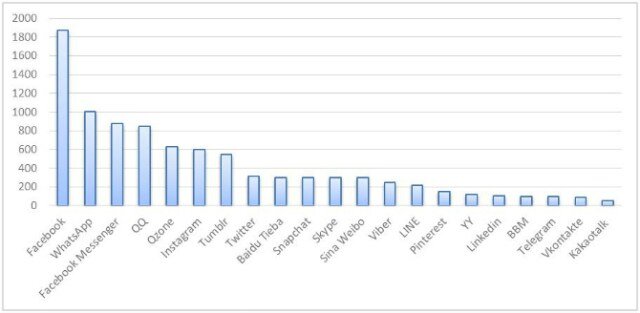
The best tools for using Twitter as a data source
Wasim Ahmed helps find the best research tool available for analyzing data appeared on social media while also offering tips and examples of using certain tools. He also points to twitter as the best social media site to extract data due to its unique platform to attract not only industry but academics.
Statistical Decision Theory and Data Collection: More or Better?
When designing data collection, researchers must take important decisions on how much data to collect and what resources to devote to enhancing the quality of the collected data. But the threshold for choosing better over bigger data may be reached long before the sample numbers in the thousands, write Jeff Dominitz and Charles F. Manski.


Big data rich and big data poor
Data is being created faster than ever before however without access to these data-sets or the expertise to analyse them, research is confronted with a replication crisis and is vulnerable to commercial motivations. The problem is growing as Katie Metzler points out, "Firstly, because replication is the engine of science, and irreproducible research slows progress... secondly the motivations of industry researchers and social scientists may differ in ways that may really matter."
Gary King: Do we need a big data treaty?
For years political scientist Gary King has argued and preached for a restructuring of the social sciences that would include “larger scale, collaborative, interdisciplinary, lab-style research teams” with big data analysis in their DNA. "The key reasons social sciences are moving from studying problems individually… to the scientific model where we’re actually solving problems, is because of the community. It is much easier to fool ourselves than it is to fool our community.” - Gary King

Lessons from Popular Ethnographies
Key points are discussed about two ethnographies that were popular with readers of SAGE journal articles in 2017: “Knowledge of practice: A multi-sited event ethnography of border security fairs in Europe and North America” and “Algorithms as culture: Some tactics for the ethnography of algorithmic systems.”